
The Immigration Appeal Process is Changing
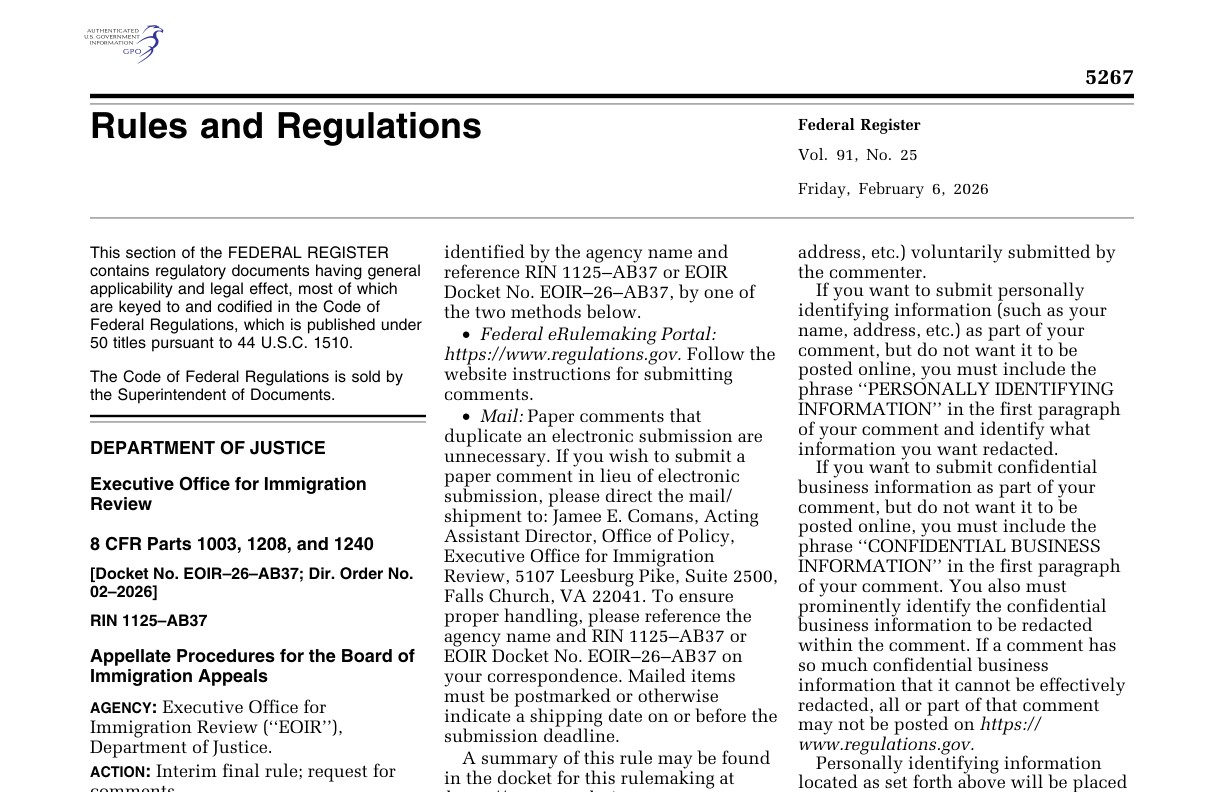
On March 9, 2026, a new Department of Justice rule takes effect that changes how immigration appeals work. The filing deadline drops from 30 days to 10. The fee rises to $1,030. And the Board of Immigration Appeals will no longer review appeals on the merits by default.
That rule is the latest in a thirteen-month series of changes to the BIA, nearly all of which disadvantage immigrants in Immigration Court and before the BIA.
The New Rule: Effective March 9, 2026
On February 6, 2026, the DOJ published an interim final rule in the Federal Register restructuring how the BIA handles appeals.
Appeal Filing Deadline Cut From 30 Days to 10
Under current rules, a respondent has 30 days after an immigration judge’s decision to file a Notice of Appeal with the BIA. The new rule cuts that to 10 days.
Most asylum cases keep the 30-day window under a statutory exception. But for everything else — cancellation of removal, adjustment of status, voluntary departure, bond appeals — the clock runs three times faster.
That’s 10 days to find an attorney (if you don’t have one), come up with $1,030 for the filing fee, and prepare the paperwork. If you’re detained, with limited phone access and no law library, it’s barely enough time to receive the decision in the mail.
Filing Fee: $1,030
The BIA appeal filing fee is now $1,030. If you also need to petition a federal circuit court ($600), you’re looking at $1,630 in filing fees alone.
Fee waivers exist but require their own paperwork, and you have to file them within the same 10-day window.
Merits Review Is Now Discretionary
This is the biggest change. Under the new rule, the BIA’s default is to summarily dismiss appeals. Your appeal only gets reviewed on the merits if a majority of the Board’s 15 members vote to take the case within 15 days of filing.
If they don’t vote to hear it, the immigration judge’s removal order stands. Start to finish — IJ decision to BIA dismissal — could be as fast as 25 days.
Briefing Rights Curtailed
The rule requires simultaneous briefing in non-detained cases and eliminates reply briefs. That means respondents can’t respond to the government’s specific arguments. You file your brief, the government files theirs, and that’s it.
How We Got Here
The March 9 rule caps more than a year of changes to the immigration appellate system.
The Board Has Shrunk by Nearly Half
In April 2025, the DOJ cut the BIA from 28 members to 15. Nine of those removed were Biden appointees, all fired in a single action in February 2025. The 15 who remain handle every immigration appeal in the country.
More Than 100 Immigration Judges Fired
The DOJ has terminated more than 100 immigration judges since 2025, plus about 40 assistant chief immigration judges. These are the trial-level judges whose decisions the BIA reviews. Fewer of them means bigger caseloads and more pressure on the ones still on the bench.
70+ New Precedential Decisions, Mostly Against Respondents
The reconstituted BIA has issued 76 precedential decisions since January 2025. An analysis of all 76 found that 86% went against the noncitizen: restricting eligibility for relief, narrowing discretionary standards, expanding grounds for removal.
That pace is unusual. The BIA typically issued 10 to 20 precedential decisions a year. Seventy-plus in thirteen months is a different kind of Board.
These decisions aren’t just internal BIA policy. They’re binding on every immigration judge in every courtroom in the country. When the BIA says a form of relief is harder to get, that applies immediately to thousands of pending cases.
~203,000 Appeals Currently Pending
EOIR’s data shows roughly 203,000 appeals pending before the BIA right now.
The Full Picture
| Factor | Before | Now |
|---|---|---|
| BIA members | 28 | 15 |
| Appeal filing deadline | 30 days | 10 days |
| Default BIA action | Merits review | Summary dismissal |
| Precedential decisions (2025–26) | ~10–20/year typical | 70+ in ~13 months |
| Filing fee | ~$110 (pre-2024) | $1,030 |
| Immigration judges terminated | — | 100+ |
A year ago, if you lost your case, you had 30 days to appeal to a 28-member Board that would review it on the merits for $110. After March 9, you’ll have 10 days to appeal to a 15-member Board that can refuse to hear it, for $1,030.
What This Means For Your Case
If your case is currently on appeal: The new rule doesn’t apply retroactively to the ~203,000 pending appeals. Your case proceeds under existing procedures. But the Board’s new precedential decisions do apply.
If you might need to appeal later: After March 9, you’ll have 10 days to file (30 for most asylum denials).
If you’re detained: The 10-day window is even harder to meet with limited phone access and no ability to walk into a law office. Having counsel in place before your hearing matters more than ever.
If you’re thinking about filing a new case: The legal standards have shifted. Relief that was routinely granted a year ago is being denied under new BIA precedent. Talk to a lawyer about how the recent decisions affect your situation before you file.
The appeal fee is $1,030. If there’s any chance you’ll need to appeal, budget for it now. Fee waivers are available but have to be filed within the same 10-day deadline.
If you have questions about how any of this affects your case, schedule a consultation and we’ll walk through it.
Chris Hammond is an immigration attorney in Houston, Texas, representing clients in removal proceedings, BIA appeals, and federal court petitions for review.
Related posts
- Which Houston-Area Counties Have Signed Agreements to Cooperate with ICE?
- What Is an I-601A Waiver? A Guide to the Provisional Unlawful Presence Waiver
- The Immigration Court Machine: How 100,000+ Cases a Month Became the New Normal